NIAP 4.0 Secure Multiviewers
Operation of a secure KVM multiviewer NIAP PP4.0
A multiviewer allows multiple video sources to be displayed simultaneously on a single screen. It receives different inputs (HDMI, SDI, IP…), converts and synchronizes them, and then mosaics them in a customizable layout. This enables operators to monitor multiple streams at once, quickly visualize the status of each source, and be alerted in case of signal loss or anomalies.
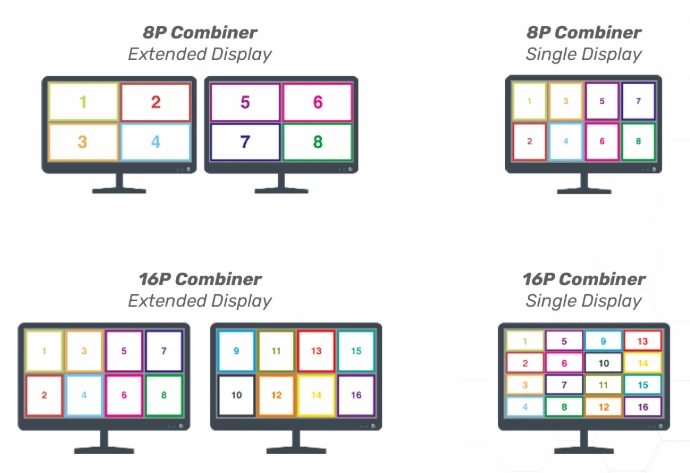
Explications du fonctionnement d'un multiviewer sécurisé NIAP PP4.0
Explanation of the operation of a secure NIAP PP4.0 multiviewer (EN)
Security principle of the secure KVM multiviewer NIAP PP4.0
HSL secure switches (KVM and Matrix) allow sharing of keyboard, mouse, video, and audio between multiple computers while ensuring strict isolation between them. Machine selection is done solely by physical action from the user via the front panel buttons (or via a 'guard' function on some models). The system relies on independent microcontrollers per channel, which emit emulated USB, video, and audio devices to prevent any direct flow between computers. Switching never allows transfer from one PC to another.
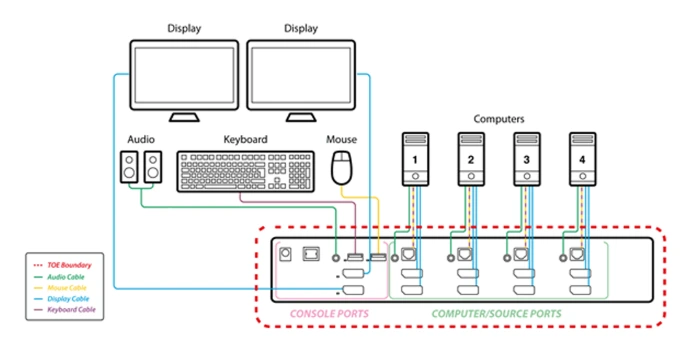
Security Principles
Complete hardware isolation
- Separate circuits for each computer (power, ground, electronics).
- No wireless interface, no hidden channels, no internal links between PC ports.
Keyboard/Mouse Security
- Dedicated USB emulation for each PC.
- Unidirectional optical diodes preventing any signal feedback.
- Immediate rejection of unauthorized devices or those attempting re-enumeration.
Video Security
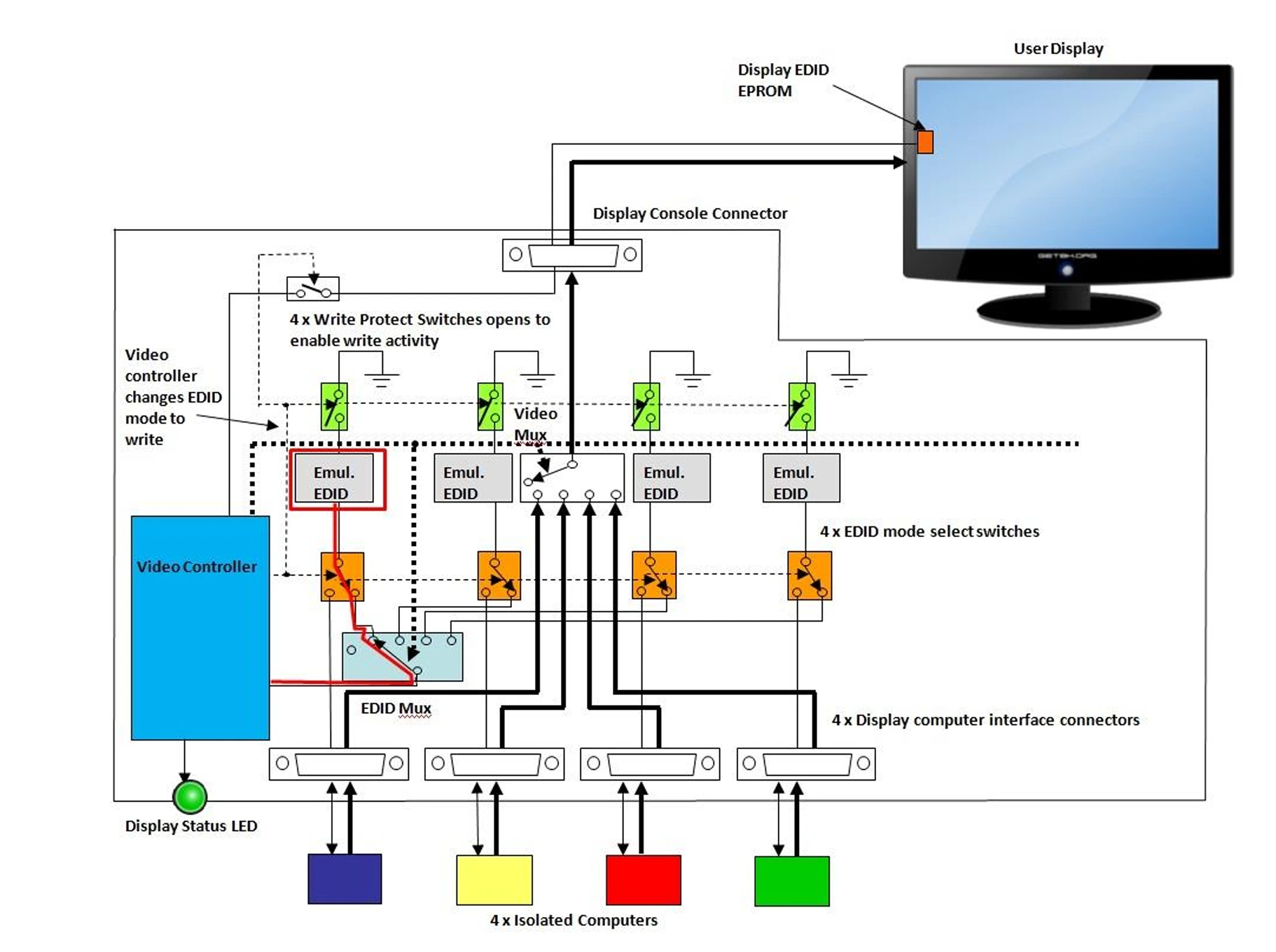
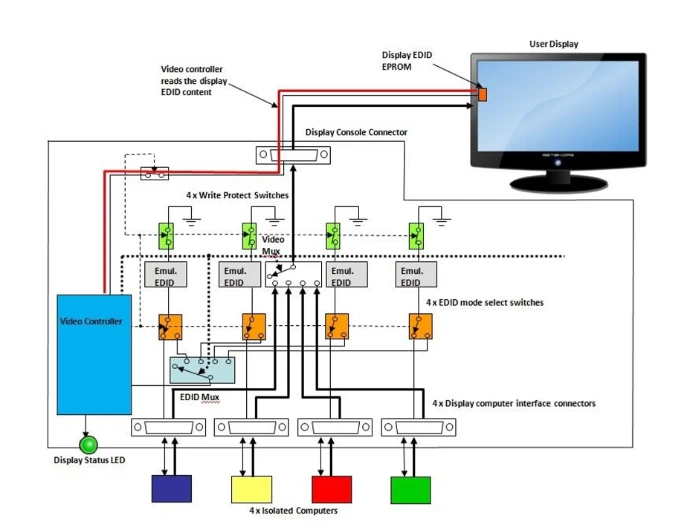
- Emulated and write-protected EDID (Separate EEPROM per channel).
- Blocking of sensitive protocols: MCCS, CEC, HDCP, ARC, HEAC, etc.
- Internal conversion DP → HDMI to neutralize the DisplayPort auxiliary channel.
Audio security
- Strictly unidirectiona lfrom the PC to the headphones/speakers.
- Analog filtering compliant with specifications (high attenuation).
- Physical blocking of any attempt to use a headset as a microphone.
Anti-tamper
- Welded chassis + holographic “VOID” labels.
- Active detection: opening ⇒ melting of an internal fuse, irreversible shutdown of the product and LED signaling.
Firmware security
- Microcontrollers in protected memory.
- Firmware not modifiable from the outside.
- No JTAG access possible.
No user data retention
Automatic erasure when changing channels or when the hardware is turned off.
Temporary data only in volatile RAM.
Secure KVM multiviewer NIAP PP4.0
The KVM Combiner switch allows control of multiple computers from different networks using a single keyboard-mouse-monitor set, while maintaining total hardware isolation between them. Thanks to their advanced security mechanisms — unidirectional flow (diodes), anti-tampering hardware (fuse), absence of exploitable memory — they prevent any leakage or compromise between sensitive domains. They thus offer a simple, robust, and highly secure solution to operate multiple trusted environments from a single workstation.
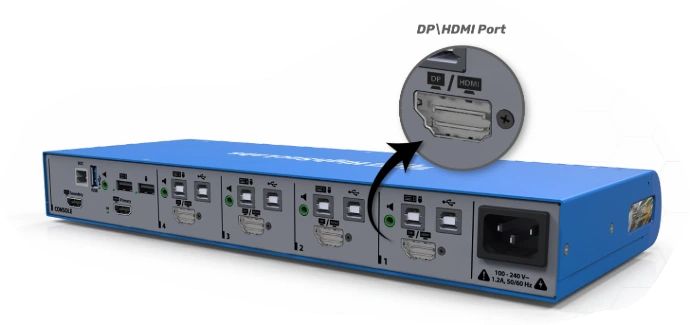
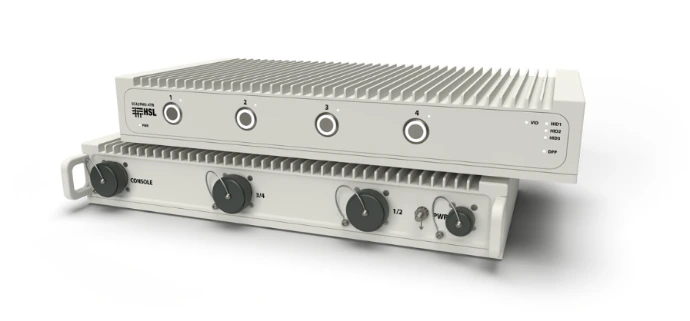
NIAP PP4.0 certified hardened KVM multiviewer switch MIL-STD-810G
The Hardened MIL-STD-810G secure KVM multiviewer NIAP PP4.0 incorporating all the previously mentioned features, with the particularity that the hardened version is certified MIL-STD-810G and offers IP67 protection.